

Three-way valves, hydraulic locks, hydraulic valves
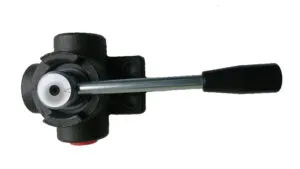

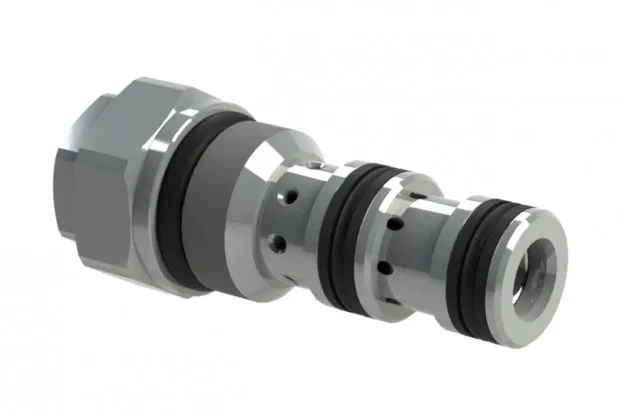
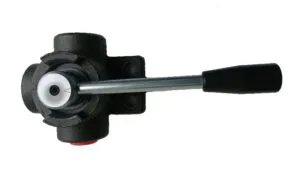
Three-way valve serves to change the direction of the working fluid flow. The inlet port connects to two working outlets, or connects the supply in series with one or the other outlet.
In many hydraulic systems, a three-way ball valve is used to change the direction of the working fluid flow between two lines. This type of valve makes it possible to properly distribute the hydraulic oil to the various working units, ensuring correct operation of the equipment. In hydraulic systems it is important to use special three-way valves, since they are designed for high pressure and provide the required flow capacity.
Hydraulic locks
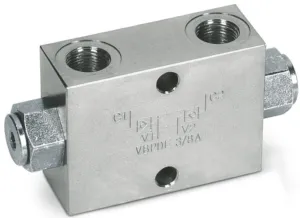
Hydraulic locks are intended to pass the flow of working fluid in one direction in the absence of a control action, and in both directions when a control action is present. Hydraulic locks are usually installed between the directional valve and the hydraulic cylinder for reliable fixation and to prevent spontaneous (uncontrolled) movement of the machine’s working units caused by inevitable leakage of the working fluid.
Hydraulic valves
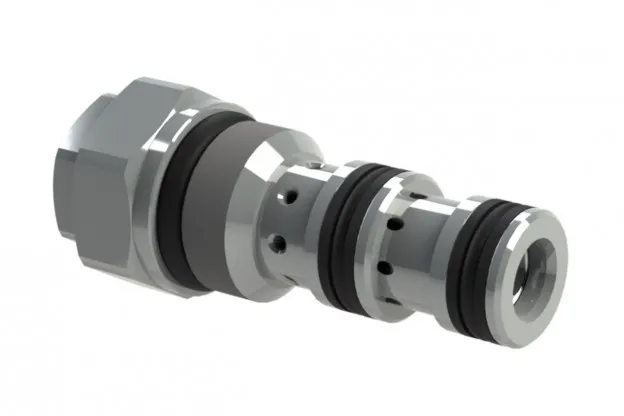
Single-lever VPR-cartridge check valves stop a single-acting cylinder.
Hydraulic valves in hydraulic drive circuits are used to protect hydraulic system elements and the working units of hydraulic machines from overloads, and to control the sequence of mechanism actions and their operating mode.
Pressure relief valves serve to automatically limit the pressure of the working fluid. The cause of a pressure increase may be increased resistance on the drive mechanism, clogging of hydraulic system elements, use of fluid with increased viscosity, etc. A normally closed pressure valve is connected to the protected and return hydraulic lines. When the pressure in the protected line rises to the value the valve is set to, it opens and remains open until the pressure equals the permissible level.
